
Disclosure: Artificial intelligence was used in the preparation of this blog post. AI can make mistakes. Citations have not been verified.
On December 9, the Supreme Court of the United States heard oral argument in National Republican Senatorial Committee v. Federal Election Commission, No. 24-621, a case that looks (and is) highly technical, but actually contains a clear and important First Amendment question: under long-standing federal law governing whether political parties can work together with its own candidates, is there a realistic likelihood that candidates working with their own political parties is going to result in bribes passing for official acts? Do contribution limits on political parties prevent corruption, or do they simply hamstring the parties while empowering “unaccountable” outside groups? It’s a complicated threshold question where the evidence will make all the difference, and the oral argument only glanced at the most important evidentiary question.
How does a Court tease out the difference between “normal” politics and bribery, and what evidence is offered to the Court so it can do that? The Supreme Court has looked at this question many times, especially the wake of the Watergate furor of the last century that drove President Nixon out of office. The distinctions are important, since political speech and activity are vital to American governance. Thus, the First Amendment requires an unusual degree of precision and specificity in distinguishing between what and where the government can and cannot limit political activity.
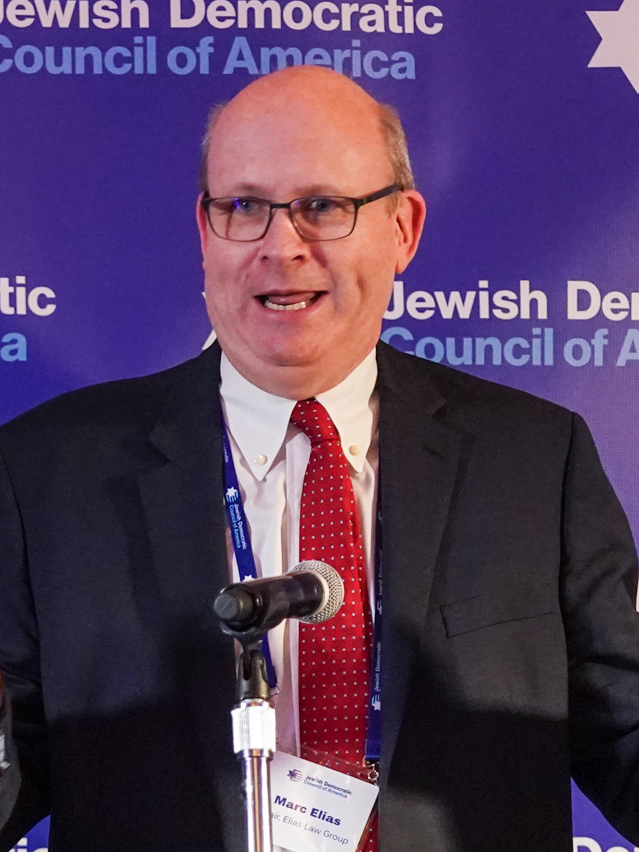
The Court heard oral argument from four of the top Supreme Court litigators, each of whom made a very sophisticated and informative presentation, which ought to help the Court make a decision intended to protect against corruption through campaign contributions that come from political parties. Unfortunately, only one of those august counsel had any practical experience with actual political campaign activities, and that lawyer, well-known Democratic litigator Marc Elias, went so far down in the weedy details of how campaigns work that he immediately “confused” at least one, and probably most, of the Justices hearing the case. It’s never a good sign when one of three Justices likely to rule in favor of your position interrupts your presentation to say: “I’m sorry, counsel, now I’m a little confused.” (Justice Sonia Sotomayor, Transcript, P. 119, lines 14-15). It’s a problem often faced when specialists in complex fields of law, such as campaign finance and tax laws, address the Court.
In any case, the oral argument came close to looking at whether there was any evidence of a real reason for the government to limit campaign financing shared between political parties and their own candidates. But they didn’t dig deep enough to discuss in precise detail what evidence of the government’s concern was actually real, and what was just “common sense” guesses and ideological prediction. The challengers presented evidence which strongly suggests there is no real problem sufficient to support government limits on how parties can work with their own candidates (28 states do not have such limits, and there have been no instances of corruption as a result in the last fifty years), while the defenders of the campaign finance limits couldn’t come up with any concrete examples of real problems if the limits simply weren’t there. That’s a real issue with the Court’s recent cases on what evidence is needed for government to limit political speech.
So, what will the Court look for? Distilled, that’s the central question that the Supreme Court wrestled with during oral arguments in NRSC v. FEC. Put another way, is the government’s expressed interest in preventing “quid pro quo” corruption (trading money for official actions) enough to overwhelm the First Amendment rights of those who want to influence American government legitimately?
The Supreme Court has long held that political campaigns and speech have the highest level of protection available, so the government’s “interests” in preventing corruption must be proven with great specificity, not just guessing about “risk” or common knowledge, or even “big money in politics.” As the Court said ten years ago in McCutcheon v. FEC, 572 U.S. 185, 191 (2014), “Congress may not regulate contributions simply to reduce the amount of money in politics, or to restrict the political participation of some in order to enhance the relative influence of others.”
It’s not enough to show that a donor gets “face time” with the elected official: “Spending large sums of money in connection with elections, but not in connection with an effort to control the exercise of an officeholder’s official duties, does not give rise to such corruption. Nor does the possibility that an individual who spends large sums may garner ‘influence over or access to’ elected officials or political parties.” Id., at 208. Justice Kennedy, in an earlier case, agreed: “The fact that speakers may have influence over or access to elected officials does not mean that these officials are corrupt… Ingratiation and access, in any event, are not corruption.” Citizens United v. FEC, 558 U.S. 310, 359-360 (2010). That’s because politics has forever involved meetings, back-slapping and deals made, usually between people who agree on what’s for the country and its people.

During Tuesday’s oral arguments, which lasted longer than two hours, the Justices focused on two opposing assertions:
- 28 States don’t have the same limits on campaign contributions but there’s no evidence of “quid pro quo bribery”: the challengers’ counsel, Noel Francisco, a renowned former Solicitor General – the top U.S. government litigator, hammered the failure to show actual corruption: “That’s why no one has identified a single case in which a donor has actually laundered a bribe to a candidate through a party’s coordinated spending even though 28 states allow it.” (Transcript P. 5, lines 6-10). Sarah Harris, representing the federal government, echoed the same point: “The state evidence that the Petitioner has talked about with respect to the 28 states in which there are no limits on party-coordinated contributions or expenditures is very telling … And there’s no evidence from those states that the sky has fallen, that there’s rampant quid pro quos being passed through, or anything else.” (Tr. P. 64, lines 3-7, 15-18)
- There’s no evidence because the prohibition against coordinated campaigns between candidates and their parties is working: Justice Sotomayor, a strong proponent of campaign finance limits, responded: “Because it hasn’t happened. We’ve been prohibiting it since Buckley [v. Valeo, 424 U.S. 1 (1976)].” Roman Martinez, appointed by the Court to defend the limits when the federal government agreed with the challengers that the coordinated campaign limits violated the Constitution, had no specific instances of corruption but pointed to: “when you see it’s raining out and you see there’s a good reason to carry an umbrella, that’s a pretty good reason to take the umbrella”, (Tr. 115, lines 6-9), and tried to cite evidence of quid pro quo bribery during Watergate, before the modern campaign contribution limits were first introduced. (Id., lines 12-20).

Is that “umbrella” and outdated evidence enough to defend the campaign finance limits? Probably not. Under recent Supreme Court decisions, the threshold evidentiary standard requires much, much more than just “pretty good reasons” to guess that bribery is happening. Many cases fail from just such shortcomings; recently the Texas mid-decade redistricting opponents failed when they didn’t present a required threshold map to show at the outset of their case that their position would accomplish what Texas did without the same effect on racial composition of voting districts.
In both bribery and First Amendment coercion cases, the Court has erected a high threshold evidentiary barrier to prove illegality, effectively distinguishing between “routine political interaction” (which is protected) and “specific transactional abuse” (which is prohibited). In short: Influence is not Corruption, and Persuasion is not Coercion. The Court only steps in when a specific official action is sold or weaponized in a clear transaction.
In both lines of cases, the Court expressed a fear that a loose definition of illegality would criminalize the day-to-day operations of government.
- Corruption: If “access” or “setting up a meeting” were bribery, every politician who helps a donor would be a felon. InMcDonnell v. United States, 579 U.S. 550, 574 (2016), the Court required evidence of a specific “official act.” And the agreement (“quid pro quo”) had to be made before the official act. Snyder v. U.S., No. 23-108 (2024).
- Censorship: If “significant encouragement” or “nagging” were coercion prohibited by the First Amendment, the President could never advocate for his policy preferences to the media. In 2024, the Supreme Court decided two major cases regarding when government pressure on third parties (social media platforms or banks) to block speech it didn’t like violates the First Amendment. The outcome turned entirely on the traceability and specificity of the evidence presented. Just as McDonnell requires an “official act” rather than just “influence,” Murthy v. Missouri, 603 U.S. ___, (2024), and Nat’l Rifle Association v. Vullo, 603 U.S. ___, slip op. at 15 (2024), require a “threat” rather than just “persuasion.”
In overturning the bribery conviction of former Virginia Governor Bob McDonnell, for example, the McDonnell Court unanimously ruled that selling “access” is not a crime. The “transaction” requires a specific exercise of government power. Governor McDonnell accepted luxury gifts (including Rolex watches and rides in Ferraris) from a donor. In return, he set up meetings for the donor with state officials to discuss the donor’s product.The Court held this was not bribery because setting up a meeting is not an “official act.” “Setting up a meeting, talking to another official, or organizing an event—without more—does not fit that definition of ‘official act’ … Conscientious public officials arrange meetings for constituents… all the time.” McDonnell, 579 U.S. at 574. The “quo” (what is being bought) must be an exercise of sovereign power (a vote, a regulation, a lawsuit), not just influence. To be a bribe, the politician must sell a decision, not just an audience.
In Murthy v. Missouri, the plaintiffs provided tens of thousands of records (including emails and meeting notes) showing White House officials pestering Facebook and Twitter to remove COVID-19 misinformation and other social media postings that the White House did not like. Justice Barrett, writing for the majority, found “the plaintiffs rely on a ‘predictable effect’ theory [like Roman Martinez’s “raining outside” comment] … But the … evidence indicates that the platforms continued to exercise their independent judgment.” Like the “access” in McDonnell, this “nagging” is part of the political process. The government is allowed to express its views, even aggressively. But there was no “or else.” The government didn’t threaten to use its official power (like revoking a license) if the companies refused. In other words, the tons of evidence was insufficient because the evidence did not prove traceability – that the claimed actions were the only cause of the claimed First Amendment violation.
In Nat’l Rifle Association v. Vullo, on the other hand, the evidence showed specificity: specific actions by a specific government official that caused harm to the complainants. Maria Vullo, Superintendent of the New York Department of Financial Services, told Lloyd’s of London (which provided insurance to the NRA) that she would go easy on them in unrelated regulatory infractions if they ceased doing business with the NRA, which they did. “Vullo’s alleged statements… were not mere attempts at persuasion. They were thinly veiled threats… [Vullo] signaled that she would leverage her regulatory power to punish Lloyd’s if it did not cease its relationship with the NRA.” This is the exact equivalent of the “official act” in bribery. Vullo didn’t just use “influence” (speech); she leveraged her specific regulatory power (the ability to investigate and fine) to force a result.
Just as “nagging” isn’t censorship without a threat, “donating” isn’t corruption without a guaranteed quid pro quo for an official act. Roman Martinez, Court-appointed counsel defending the statute, warned the Court that striking these coordinated campaign limits might cause “dominos to fall” across campaign finance law. (Tr. 102, line 3). But he failed to identify a single “domino” where a party contribution functioned as a binding transaction for an official act. Without that “hard” transaction, a donation to a party is, at most, an attempt to garner “ingratiation and access,” which, as Justice Kennedy explicitly noted in Citizens United “is not corruption.”
This case should not turn on the number of states who have not had an episode of quid pro quo corruption caused by coordinated campaign financing nor on whether Republicans or Democrats should prevail. The Court has repeatedly ruled that government officials of any party must be free to interact, influence, and be influenced.
The Constitution only draws a line when that interaction turns into a binding transaction involving the state’s sovereign power—whether that is selling a vote (McDonnell) or threatening a punishment (Vullo). Without that “hard” transaction, the Court leaves the conduct to the political process, not the courts.
It’s rare that an oral argument will provide certainty about the outcome of a case. But it would be surprising in this era of strict enforcement of threshold evidentiary standards (particularly by Justice Barrett – a crucial swing vote who essentially remained silent at this oral argument and who wrote the Murthy traceability opinion) if the Court avoids a threshold evidentiary requirement in a First Amendment case.
 Vox PPLI
You must be logged in to post a comment.