“Where the First Amendment is implicated, the tie goes to the speaker, not the censor.” — Fed. Election Comm’n v. Wisconsin Right to Life, 551 U.S. 449, 474 (2007).
The First Amendment “‘has its fullest and most urgent application’ to speech uttered during a campaign for political office.” Eu v. San Francisco County Democratic Central Comm., 489 U.S. 214, 223 (1989) (quoting, Monitor Patriot Co. v. Roy, 401 U.S. 265, 272 (1971)). This primacy makes the Federal Election Campaign Act, which governs political campaign speech and related activities, the most sensitive federal law in First Amendment terms. Which, in turn, makes the Federal Election Commission, which enforces most provisions of FECA, potentially the most dangerous federal agency; it is “[u]nique among federal administrative agencies, having as its sole purpose the regulation of core constitutionally protected activity — the behavior of individuals and groups only insofar as they act, speak and associate for political purposes.” Van Hollen v. FEC, 811 F.3d 486, 499 (D.C. Cir. 2016).
Congress was fully aware of this explosive potential when it established the FEC, balancing the agency between political parties and establishing due process norms to protect First Amendment rights. For example, the 1976 House Committee Report on FECA said: “It is therefore essential in this sensitive area [of campaign regulation] that the system of administrative and enforcement enacted into law does not provide room for partisan misuse . . . .” H.R.Rep. No. 917, 94th Cong., 2d Sess. 3 (1976). Some observers rightly claim that the enormous procedural roadblocks in the path of FEC enforcement actions are a feature, not a bug, in the agency’s design. No person or party is considered sufficiently independent, alone, to decide who can speak and how, except as delegated by Congress and interpreted by the courts.
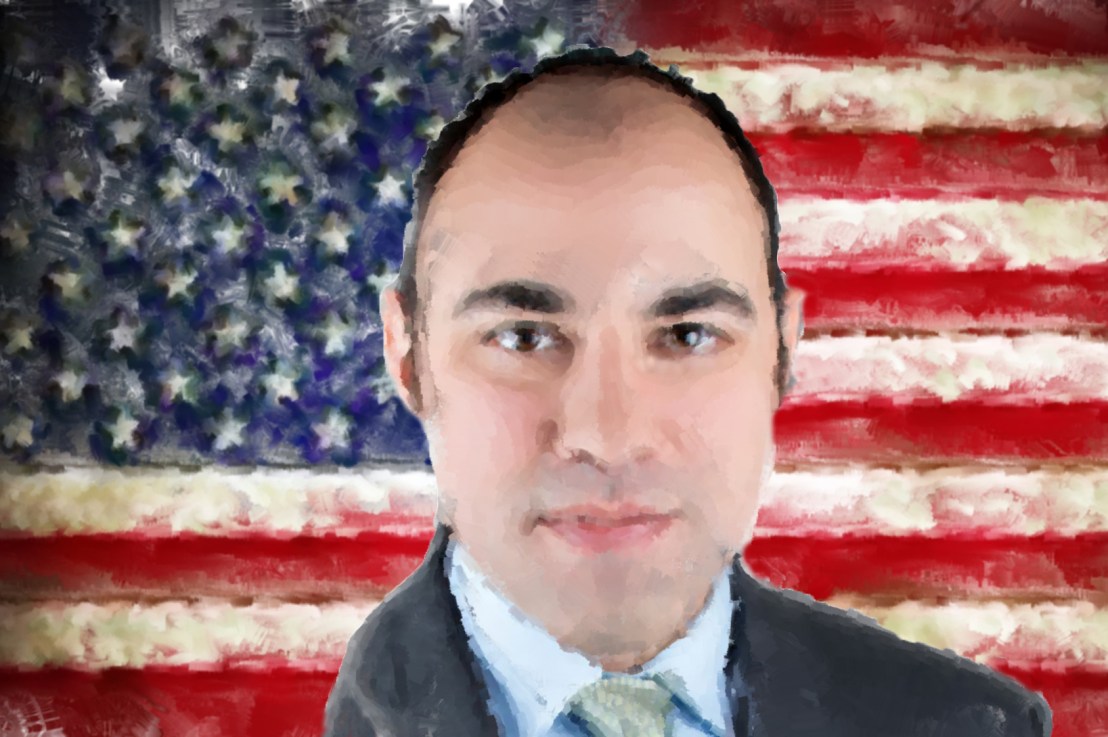
Which makes the latest thunderstorm stirred up by FEC Commissioner Ellen Weintraub more consequential than her usual rants. And the comprehensive rebuttal by FEC Chair Caroline Hunter, pictured above, consequently more important. The fight is over what is enough to trigger an FEC investigation; in particular, is it enough that the underlying allegation, even if unproven, ambiguous or untrue, is “a blockbuster” about some heavily-covered news story, or does there have to be at least some reasonably-credible evidence that the allegation is true?
Weintraub says foreign interference is so important that even an anonymous claim with no evidence is enough to spark an FEC investigation; “we should have looked into it merely because it was so important and we need to put it to rest one way or the other.” Hunter says “nope,” the Constitution and the FECA require at least some credible evidence on any allegation, even one over which the media are in a frenzy: “the Act does not permit this Commission to investigate the political activities of Americans (or American advocacy groups) ‘merely because’ an allegation is important, serious, blockbuster, sensational, going viral, or trending on Twitter.” Otherwise, Hunter points out, all political enemies would have to do to force an unwarranted investigation is exaggerate their false claims into “blockbusters.”
The fracas began, as so many recent ones have, with news media reports on allegations of Russian interference in the 2016 Presidential election. In this case, however, the anonymous allegations also involved the National Rifle Association, an American advocacy organization which does not shy from controversy and so attracts much as a result.
A January 2018 story by McClatchy News Service, whose best known outlet is the Sacramento Bee (and which filed for bankruptcy six weeks ago), led with the assertion that: “The FBI is investigating whether a top Russian banker with ties to the Kremlin illegally funneled money to the National Rifle Association to help Donald Trump win the presidency, two sources familiar with the matter have told McClatchy.” The story tied the supposed FBI investigation to the since-completed Mueller investigation and other supposed congressional and international investigations. The story did not cite any FBI sources, though it admitted that: “The extent to which the FBI has evidence … could not be learned.”
Just as a few credulous Americans believed 2016 stories like Hillary Clinton helped a pedophile ring based in a pizza parlor, the McClatchy “blockbuster” story triggered thousands of copycat news stories, again with no factual basis, all echoing the original allegation. Even worse, Brad Woodhouse, head of the American Democracy Legal Fund, filed a complaint with the FEC based on the McClatchy article.
Complaints like that are common in an election year, and this was 2018, when control over the House and Senate was at issue. The complaint asked the FEC to “investigate these claims and any additional coordination between Respondents [the NRA] and foreign nationals in connection with the 2016 presidential election.” The complaint was based solely on news sources, which, again, is common practice in complaints made to the FEC. So common, in fact, that political parties and campaigns expect to respond to complaints based entirely on news stories, few of which actually turn into significant FEC investigations. Most just waste time and money in victims’ responses and preliminary reviews by FEC staff.
But there tends to be a bottom-line requirement that there be at least some substance – some clear evidence grounded in reality – in such stories and in such complaints. This de minimis substance requirement is derived from the due process requirements that such investigations must respect, including the requirement that at least four Commissioners find “reason to believe” in the allegations in a complaint before opening an official investigation of wrongdoing.
The FEC regulations require several preliminary reviews even before the Commission can vote to find “reason to believe” a complaint’s allegations of legal violations, as several FEC Commissioners explained in detail in dismissing a complaint against the Hillary Rodham Clinton for U.S. Senate Exploratory Committee in 2000:
Any person who believes a violation of the FECA has occurred may file a complaint with the Commission. 2 USC § 437g(a)(l). The FECA anticipates that the Commission may summarily dismiss the complaint before the expiration of the 15 days afforded to alleged violators to set forth their reasons why no action should be taken against them. Id. After the response period closes, the Commission has the power to investigate alleged FECA violations only where there is “reason to believe” that a violation has been, or is about to be, committed. 2 USC § 437g(a)(2).
The Commission may find “reason to believe” only if a complaint sets forth sufficient
specific facts, which, if proven true, would constitute a violation of the FECA. Complaints not based upon personal knowledge must identify a source of information that reasonably gives rise to a belief in the truth of the allegations presented. See 11 CFR 11 1.4(d)(2); MUR [Matter Under Review] 4545 (ClintonGore ’96 Primary Comm./Amtrak) (“While the available evidence is inadequate to determine whether the costs of the Train Trip were properly paid, the complainant’s allegations are not sufficient to support a finding of reason to believe . . . .”); MUR 3534 (Bibleway Church of Atlas Road) (“[Tlhere was a lack of evidence indicating the literature was distributed on behalf of the [Respondent] or at its expense.”).
Unwarranted legal conclusions from asserted facts, see SOR [Commissioners’ Statement of Reasons] in MUR 4869 (American Postal Workers Union), or mere speculation, see SOR of Chairman Wold and Commissioners Mason and Thomas in MUR 4850 (Fossella), will not be accepted as true. In addition, while credibility will not be weighed in favor of the complainant or the respondent, a complaint may be dismissed if it consists of factual allegations that are rebutted with sufficiently compelling evidence provided in the response to the complaint, see MUR 4852 (Wiebe), or available from public sources such as the Commission’s reports database.
In order to help Commissioners in this lengthy and complicated review of Woodhouse’s complaint, the FEC’s Office of General Counsel conducted one of its typical investigations, not only reviewing the evidence (or lack thereof) in the complaint, but also checking on other sources, such as filings in criminal cases involving the Russians cited in the original news story. The OGC reported, however,
the available information does not support a finding of reason to believe with respect to the alleged violations of federal campaign finance law. The allegations in the Complaint are premised on a vague news article reporting that the Federal Bureau of Investigation (“FBI”) is investigating …, but without providing any specifics. The Complaint assembles an assortment of circumstantial information …
On the other hand, the NRA filed numerous specific and detailed rebuttals to the complaint’s allegations. The OGC concluded:
In light of the circumstances presented and the affidavits submitted by the NRA
regarding its financial activities during the relevant period, there is not an adequate basis to conclude that Respondents violated the foreign national prohibition, as alleged.
The NRA’s rebuttals must have seemed “sufficiently compelling evidence provided in the response to the complaint,” to cause at least some of the FEC Commissioners to want to dismiss the complaint. On July 9, 2019, the FEC Commissioners split 2-2 over whether there was “reason to believe” that federal campaign finance law had been broken. The tie vote automatically rejected the complaint.
Commissioner Ellen Weintraub, then the Chair of the FEC, was quite upset about the vote and rejection, and said so in an August 16, 2019 Statement of Reasons. Her view was that the allegations were so substantial that the FEC should investigate them even without evidence in the record; that just the unsupported claim was so important that the due process protections should be ignored:
Some allegations are too serious to ignore. Too serious to simply take Respondents’
denials at face value. Too serious to play games with. Yet in this matter, my colleagues ran their usual evidence-blocking play and the Commission’s attorneys placed too much faith in the few facts Respondents put before us.
As a result, this agency barely lifted a finger to find out the truth behind one of the most blockbuster campaign finance allegations in recent memory. …
The article contains few details on the alleged funneling, but its report that the FBI is
investigating the matter is direct and specific. And there can hardly be a matter more significant for this Commission than large-scale foreign influence exerted by a preeminent global adversary aimed at interfering with a U.S. presidential campaign. The complaint’s use of this article alone justified my vote to find reason to believe a violation of the Act may have occurred.
Current FEC Chair Caroline Hunter responded on March 20, 2020, with an equally-blistering rejection of Weintraub’s screed. To Hunter, it was the FEC’s constitutional due process responsibilities that were “too serious to play games with:”
Boiled down to its essence, the complaint in this matter claimed that Russian sleeper
agents used the National Rifle Association (“NRA”) to help Donald Trump win the 2016 presidential election. Such an explosive claim should only have been made — let alone filed with the federal government — if there were credible evidence to back it up. That is not what happened here. Instead, the complaint capitalized on fears of foreign influence in U.S. elections to conjure inferences of illegal conduct, and relied on statements from anonymous sources in a single article written by reporters whose dependability in this area is in doubt.
I agreed with the recommendation of the Commission’s Office of General Counsel
(“OGC”) to dismiss the complaint. But my colleague, Commissioner Weintraub, strongly disagreed; she has argued that the only acceptable Commission response would have been to launch an immediate investigation. Given the law’s protections against partisan prosecutions, her approach is not just wrong, it is dangerous. This statement explains why. …
I do not believe that Commissioners’ concerns about foreign influence should shut down our ability to think critically, or that mere claims of foreign interference, by themselves, should trigger knee-jerk Commission investigations of Americans’ political activities.
The complaint in this matter did not offer a shred of credible evidence in support of its claim … In contrast to the unsubstantiated allegation, the NRA’s denials were specific, detailed, and based on facts. …
The reasons that my colleague has given for her vote have little, if anything, to do with the evidence or the law. First, she focuses on the nature of the allegation, by itself, as justifying a Commission investigation. She argues that the allegation is “too serious to ignore,” “too serious to take the Respondents’ denials at face value,” “one of the most blockbuster campaign finance allegations in recent memory,” concerns “a matter of . . . national importance,” and potentially implicates “an extraordinarily significant violation of the Act.” Separately, she has reiterated the “blockbuster” nature of the allegation and said that “we should have looked into it merely because it was so important and we need to put it to rest one way or the other.”
But the Act does not permit this Commission to investigate the political activities of
Americans (or American advocacy groups) “merely because” an allegation is important, serious, blockbuster, sensational, going viral, or trending on Twitter. To the contrary, the Commission may open investigations only when there is reason to believe a violation occurred — that is, when credible evidence supports the allegation. …
Further, launching an investigation “merely because” a particular allegation is a
“blockbuster” would encourage increasingly spectacular but unfounded allegations: The more spectacular the claim, the smaller the factual basis would need to be. At the same time, it would negate the Act’s requirement that respondents be given an opportunity to respond to allegations before the Commission finds reason to believe. Under my colleague’s rationale, if a complaint alleges something sufficiently sensational, there’s nothing a respondent could say to avoid a reason-to-believe finding and investigation. …
Investigating the political activities of American advocacy groups threatens to chill the free exercise of their First Amendment rights of political speech and association. Thus, the Commission should take such action only when there is a demonstrable factual basis for it. Even my colleague has acknowledged that “facts matter,” and serious allegations of wrongdoing demand evidence. Here, OGC determined the facts did not indicate or even suggest activity that is illegal under the Act. I agree.
There is nothing wrong with concerned citizens filing complaints with the appropriate government agencies alleging wrong-doing. That is the essence of the First Amendment-protected right of “petitioning the government for redress of grievances.”
But there is a world of difference between a citizen filing a complaint and saying that the simple filing of an unsupported “blockbuster” complaint, especially in the face of documented responses demonstrating that the claims are not true, should trigger the immense burdens of governmental investigations. The recent Mueller investigation cost taxpayers about $32 million and undoubtedly millions of dollars in defense costs.
As FEC Chair Caroline Hunter pointed out, especially in an election year, one can expect rough and tumble hardball politics, and the FEC should think twice about injecting an official investigation into any campaign. The article underlying this tumult itself is a classic example: allegations by themselves sparked thousands of news reports breathlessly repeating … nothing at all.
The most dangerous federal agency shouldn’t light that kind of fuse, no matter how “blockbuster” the allegation, without a genuine basis for believing the truth of an allegation. The system is not set up for that kind of agency malpractice, nor should it be.



 Vox PPLI
You must be logged in to post a comment.