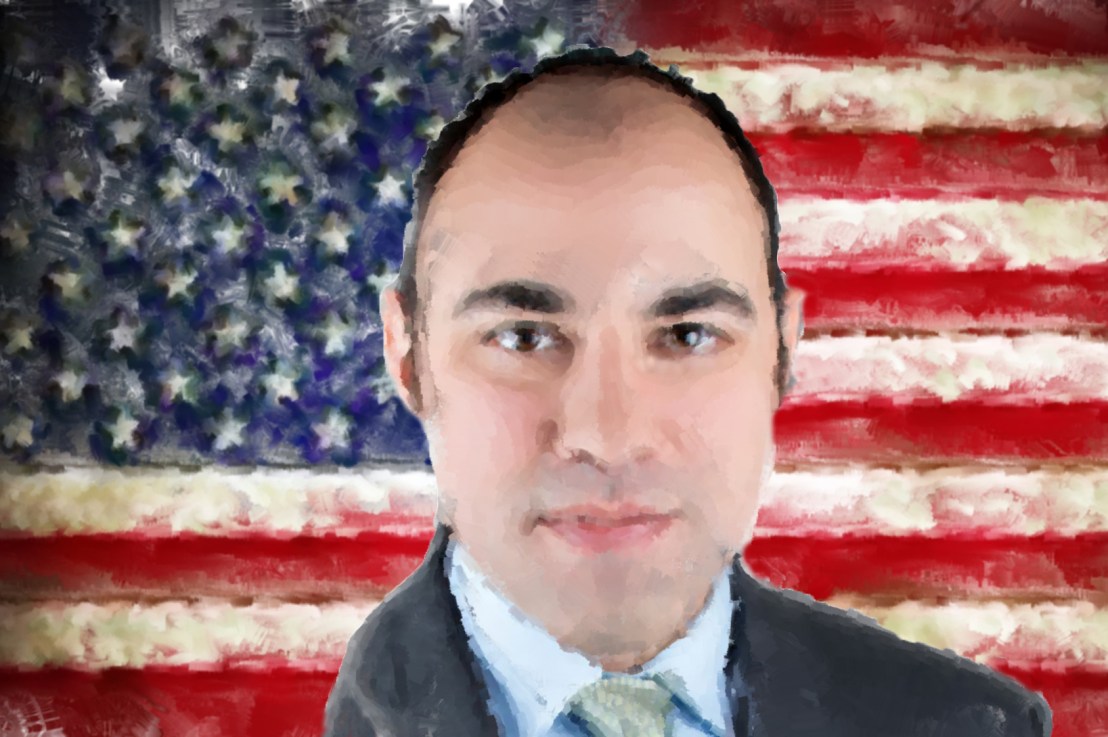
Allen Dickerson Nominated for Federal Election Commission

Allen Dickerson Nominated for Federal Election Commission

Today President Trump nominated Allen Dickerson to be a Commissioner on the Federal Election Commission. Dickerson is currently Legal Director of the Institute for Free Speech in Washington, D.C., and is one of the most active and thoughtful First Amendment litigators. He is a long-time member of the First Tuesday Lunch Group, and was co-counsel on a recent Supreme Court brief for the Public Policy Legal Institute and IFS: 16-1436 Public Policy Legal Institute tsac

Both the White House and IFS released statements:

Today, President Donald J. Trump announced his intent to nominate the following individuals to key positions in his Administration:

Allen Dickerson, of the District of Columbia, to be a Member of the Federal Election Commission.

Allen Dickerson is currently the Legal Director at the Institute for Free Speech, where he leads a nationwide First Amendment litigation practice. Previously, he was an Associate with Kirkland & Ellis, LLP. He also serves as Captain in the Judge Advocate General’s Corps, United States Army Reserve.

Mr. Dickerson received his undergraduate degree from Yale College and his J.D. from New York University School of Law.

Institute for Free Speech press statement:

“The White House could not have found a more qualified nominee than Allen Dickerson. He will bring years of experience, expertise, and a strong commitment to the rule of law to the Commission,” said Institute for Free Speech Chairman and former Federal Election Commission Chair Bradley A. Smith. “He is a lawyer’s lawyer and his temperament is ideally suited for this position.”

During his time at the Institute for Free Speech, Dickerson spearheaded the group’s litigation efforts and engagement with regulatory agencies. He testified numerous times before Congress, state legislatures, and the FEC. Dickerson is also a highly sought-out public speaker on campaign finance law and has authored several law review articles on the topic.

“It is a tremendous honor to be considered for the FEC. I am grateful for the president’s confidence, and hope to have the opportunity to serve the American people in this important role,” said Dickerson.

Also today, FEC Commissioner Caroline Hunter announced that she would be resigning from the Commission, effective July 3. If Dickerson is not confirmed before Hunter leaves, the FEC will again be without a quorum, as it had been for nine months until recently.

UPDATES:

Matt Petersen, former FEC Chair:

 “Allen will be an outstanding addition to the FEC. As one of the country’s preeminent free speech litigators, Allen is a leading expert on how campaign finance law intersects with free speech. He is also a true gentleman. Allen’s exceptional background and experience, along with his even-keeled temperament, will allow him to be a leader on the Commission for many years to come.”

Lee Goodman, former FEC Chair and member of the First Tuesday Lunch Group:

“Allen has a brilliant legal mind and years of experience identifying the proper balance between regulation and free speech. He will be a formidable commissioner. The team of Trey Trainor and Allen Dickerson will shore up the Republican side of the commission. Now we need one additional Republican commissioner and three new Democratic commissioners to put the agency on track.”

David Warrington, President, Republican National Lawyers Association:

“Allen is a brilliant legal mind committed to the rule of law and protecting the rights of all Americans to participate in the political process. In addition to his military service, this is another opportunity for Allen to serve his country in this important capacity. He will be an extremely valuable addition to the Federal Election Commission.”

Center for Responsive Politics:

With FEC again defanged, Trump’s latest nominee likely to face opposition

Trump’s FEC nominee to replace Hunter will likely draw even stronger opposition. …

Dickerson cheered the Supreme Court’s 2010 Citizens United v. FEC decision that unleashed nearly $1 billion in dark money into federal elections over the last decade, arguing that the ruling greatly expanded Americans’ freedom to speak on political issues. Since then, Dickerson has led the Institute for Free Speech’s legal challenges against laws and regulations that would force politically active nonprofits to disclose their donors.

Formerly the Center for Competitive Politics, the Institute for Free Speech opposed the DISCLOSE Act, Democrats’ attempt to crack down on dark money spending following the Supreme Court’s landmark ruling. Dickerson argued that the bill chilled free speech rights of nonprofits to advocate on political issues. Senate Republicans successfully blocked the legislation.

Dickerson supported reversing a district court decision that unsuccessfully attempted to reveal donors to dark money groups. He led a lawsuit against California over its law that required nonprofits to disclose names of donors to the state. He also supported a lawsuit that challenged the legality of Alaska’s relatively low contribution limits.

Wiley, Rein:

The White House’s decision to nominate Dickerson solo, without pairing him with a Democratic nominee, is a significant development. With Hunter’s departure, the six-member Commission is down to three commissioners. Four commissioners are required to make a quorum that can conduct agency business. The three remaining commissioners are its new Chairman, Trey Trainor, a Republican, and incumbent commissioners Ellen Weintraub, a Democrat, and Steven Walther, an independent who traditionally has voted with the Democrats. Weintraub has served 18 years, since 2002, while Walther has served since 2006. Both serve long past their original six-year terms.

That composition leaves the White House and Senate some important decisions about how to remake the Commission. The White House could nominate five new commissioners, three Democrats and two Republicans, to join Chair Trainor, who joined the Commission this month. Alternatively, the White House could nominate one Democrat to fill the empty Democratic seat and two new Republicans to fill the two empty Republican seats. The White House’s announcement that it is nominating only Dickerson at this time indicates an incremental approach. Dickerson would join Trainor to fill two Republican seats, while Weintraub and Walther would continue serving past their terms in Democratic seats. The quorum would be restored with the bare minimum of four commissioners. Whether the Senate agrees with this approach remains to be determined.

For the foreseeable future, the agency once again will be without a quorum for at least some period of time this summer. The agency can resume regulatory business once Dickerson is formally nominated, confirmed by the Senate, and sworn into a seat. That process may take time.

ABC News:

Trevor Potter, president of Washington-based nonpartisan ethics group Campaign Legal Center and a former Republican chair of the FEC, called for a prompt replacement of Hunter to restore the quorum, saying her resignation has left “democratic elections with significantly less government oversight.”


 

Treasury and IRS issue final regulations to protect donor privacy

Treasury and IRS issue final regulations to protect donor privacy

On May 26, 2020, the Dept. of the Treasury and Internal Revenue Service issued a final version of proposed regulations protecting donor privacy. Rejecting pleas by some organizations that donors must be revealed, the explanation of the new final regulations said:

The Treasury Department and the IRS have concluded that the IRS does not need the names and addresses of substantial contributors to tax-exempt organizations not described in section 501(c)(3) to be reported annually on Schedule B of Form 990 or Form 990-EZ in order to administer the internal revenue laws. In light of the risks and burden associated with requiring the annual reporting of such information, this Treasury Decision revises the regulations under section 6033 to remove the general requirement for tax-exempt organizations not described in sections 501(c)(3) or 527 to report annually the names and addresses of substantial contributors.

The IRS had proposed regulations clarifying that tax-exempt organizations other than 501(c)(3) charities and 527 political organizations did not have to list donor names and addresses on Schedule B to IRS Form 990 annual reports. More than 8,000 comments were received on the proposed donor privacy regulations, the vast majority of which supported the IRS’s efforts to protect donors. In February, the IRS held a public hearing at which most commenters also supported the proposed regulations.

The Public Policy Legal Institute filed extensive comments supporting the proposed regulations, giving the history of the statutory language and prior IRS efforts to protect donors. The PPLI comments can be found here: Sched B donor disclosure comments final

The final version of the new regulations did not vary significantly from the proposed regulations, but included several of the additional features proposed by the PPLI’s comments.

One of the most important of the additional features requested by PPLI was to clearly instruct states and local governments of the strict limitations on the use of IRS information. The final regulations did just that:

     The Treasury Department and the IRS reiterate that the [Internal Revenue] Code limits the purposes for which states may use returns or return information obtained from the IRS. When states receive returns or return information under section  6103(d), the use of that information is limited to the administration of state tax laws. When states receive returns or return information under section 6104(c), the use of that information is limited by statute to administering state laws relating to the solicitation or administration of charitable funds or charitable assets of such organizations. Use of returns or return information received from the IRS under these sections for purposes other than those listed above (for example, for the enforcement of campaign finance laws or consumer protection laws) is not consistent with states’ authorized use under sections 6103(d) and 6104(c). While some states may use name and address information for those authorized purposes, the divergent comments from state attorneys general indicate that the desire to obtain such information, and the purpose for doing so, may differ from state to state. To the extent that any state determines that the burdens of collecting and maintaining such information are justified by its own needs, such a state is free to require reporting of such information to the state and to maintain the information at the state’s own expense.


New Reporting Sheds Light on Chinese-American Cooperation in Fighting Coronavirus

Leaving aside the legal question of the federal government’s position on prosecuting Americans for believing foreign propaganda, new reporting shows that information-sharing can be beneficial, particularly in a period of intense international crisis.

And the underlying message bolsters the rationale for the First Amendment: government information control can be more dangerous than free expression. Especially in a time of crisis when information is at a premium.

Getting information out of China can often be difficult, but two invaluable sources of information are the South China Morning Post and the Wall Street Journal. Today found two articles of particular First Amendment interest:

The SCMP story, “China’s Centres for Disease Control should have power to warn public, says country’s leading expert,” by correspondent Wendy Wu, was particularly telling, putting the contentious question about information control by the Chinese central government in a different light. In February, China’s “leading epidemiologist Zhong Nanshan … [told the media]  that CDC’s functioning had been weakened in recent years, and it was unable to report directly to the central government or issue public warnings.”

On Sunday, Dr. Zhong told People’s Daily that “The CDC [China’s Centres for Disease Control and Prevention] should be granted certain powers, rather than merely being a technical unit to collect and report data.” He emphasized that experts should be permitted to address the public directly, rather than being subject to government limitations:

“China’s CDC is so far basically a technical department. In finding problems, discovering origins of viruses, assessing the severity of contagion, it should have the authority to interpret,” he said. “On one hand it needs professionals, on the other hand it needs to be empowered, like those in some other countries, that can speak to the public when necessary or in emergencies.”

And Jonathan Cheng reported [paywall] for the WSJ in “As U.S., China Clash Over Coronavirus, Their Doctors Quietly Join Forces,”  about the extensive cooperation between front-line Chinese and American doctors and scientists trying to combat the virus.

The U.S. and China are at each other’s throats, bickering over the origins of the coronavirus and bashing each other’s handling of the crisis.”

Behind the scenes, hundreds of doctors and scientists in the U.S. and China have been using online platforms to hold virtual meetings, trading notes on how best to treat patients and procure needed supplies. …

One of the key figures in the trans-Pacific collaboration has been Zhong Nanshan, China’s best-known epidemiologist and the director of the Guangzhou Institute of Respiratory Diseases.

When the coronavirus outbreak began to grow dire in Wuhan in late January, Dr. Zhong—head of a coronavirus expert committee for China’s cabinet-level National Health Commission—reached out to Harvard through Hui Ka Yan, a billionaire real estate mogul whose Evergrande Group has endowed several initiatives at Harvard, including an immunological disease center. …

[Zhong] had visited Wuhan in mid January and his declaration on Jan. 20 that the virus could be transmitted between humans marked a turning point in the world’s understanding of the pathogen. …

“We took advantage of the people that we know in China who were very open and from the beginning they told us, ‘You got to get ready and you got to be aggressive,’” Dr. Criner said. “We listen to them and that’s what we’ve done.”

Some of the strongest connections are through Chinese-American practitioners working in the U.S. “We knew sooner or later this [epidemic] was going to happen here, because we have such strong ties,” said Xu Ruliang, president of the Association of Chinese American Physicians, whose more than 700 members are largely clustered in the tri-state area of New York, New Jersey and Connecticut that has been hit hardest by the coronavirus.

The twin messages? Sometimes lower-level citizens can do more good exchanging information than governments can by inflaming and suppressing it.

And isn’t that the whole purpose behind the First Amendment?

Can Americans Be Prosecuted for Believing the Widespread Chinese Disinformation Campaign About Coronavirus?

Can Americans Be Prosecuted for Believing the Widespread Chinese Disinformation Campaign About Coronavirus?

Facebook is taking a pounding for failing to identify as “political” many ads placed by a coronavirus-related disinformation campaign run by Chinese state media. This isn’t so much Facebook’s problem, as it is an expected outcome of sophisticated intentional Chinese disinformation. Vice noted that:

Chinese state media has been flooding Facebook and Instagram with shady political ads praising Beijing and bashing “racist” President Trump as part of a wider campaign to rewrite its part in the global coronavirus pandemic.

The undisclosed political ads, from Global Times, Xinhua News Agency, Global China Television Network (GCTN), and China Central Television (CCTV), all ran on the two platforms in recent months, targeting users around the world in English, Chinese, and Arabic, but they’ve only now been flagged by Facebook as being political.

Facebook was not the only platform hosting this type of ad; others, such as Twitter, have actively shut down misleading ads and posts. In March, Vice explained its analysis of the elements making up “China’s playbook”, which must seem particularly chilling to anyone supporting free speech on public policy:

  • Silence Dissenting Voices
  • Block Information
  • Spin-up State Media
  • Spread Disinformation
  • Promote Conspiracy Theories
  • Write a Book
  • Deploy a Twitter Army
  • Gin Up More Conspiracy Theories

And Pro Publica explained in long-form detail how the “playbook” disinformation network was shifted from attacking protesters in Hong Kong to coronavirus:

The activities of the influence network were consistent with the timing of the government’s handling of the epidemic and the themes it was publicly pushing. Discussions of a novel coronavirus in Wuhan began swirling on Chinese social media in early January, but the network made no mention of it, continuing to criticize the Hong Kong protests and attack political dissidents. On Jan. 29, six days after the Chinese central government imposed a lockdown on Wuhan, the influence network suddenly shifted its focus to the coronavirus epidemic. That same day, OneSight announced a new app that tracked virus-related information. The announcement was accompanied by a graphic declaring that OneSight would “transmit the correct voice of China” to the world.

“The correct voice of China” is likely to be interesting reading. For example, the official Chinese timeline of the coronavirus outbreak, released Monday by the state-owned media company Xinhua, ignores the crucial first three weeks of the epidemic. One long-form video placed by the Chinese state-owned Global Times, and run on Facebook from March 27 to April 2, said that the Chinese government moved “instantly” at the “onset” of the coronavirus outbreak “on January 23.” But the virus erupted in early December 2019, and Chinese officials actively suppressed information about the outbreak, including silencing Li Wenliang, the whistleblower Wuhan doctor whose death caused an unprecedented wave of rage and grief on social media in China.

To its credit, Facebook announced that it was planning to start identifying ads placed by state actors:

“We are progressing on our plans to label state-controlled media pages on Facebook, including from China, and will have more to share on this soon. We are continuing to work with publishers and third party experts on this issue to ensure that we get this right” a Facebook spokesperson told VICE News, adding that the coronavirus outbreak will delay the rollout of further political transparency measures.

Facebook is struggling to police its platform during the pandemic, as it has sent home the thousands of people its uses to moderate toxic content. Facebook is relying much more heavily on its automated systems to approve ads and moderate content.

But Facebook’s belated announcement doesn’t actually settle the legal questions raised by this second massive state-sponsored disinformation effort. Even leaving aside the obvious implications for public advocacy inherent in police-state silencing of whistleblowers, the Chinese disinformation campaign raises troubling questions under American public policy law, especially in light of recent U.S. Department of Justice prosecutions and investigations, and assertions by Federal Election Commissioner Ellen Weintraub that all it should take to trigger an FEC investigation is a viral or “blockbuster” social media story.

First, the Global Times ad not only mentioned President Trump just before presidential primary votes, but called his actions “racist.” Chinese ads which name American politicians running for office, if run in the United States before elections, including primary elections, might constitute contributions of “things of value” or “foreign campaign intervention” or even “electioneering communications” under federal and state laws:

An electioneering communication is any broadcast, cable or satellite communication that refers to a clearly identified federal candidate, is publicly distributed within 30 days of a primary or 60 days of a general election and is targeted to the relevant electorate.

These are the same sort of actions that triggered intense governmental scrutiny of social media ads placed by the Russian Internet Research Agency disinformation campaign in the 2016 presidential campaign. No such governmental investigations have been announced or leaked as a result of the Chinese coronavirus disinformation campaign, though there is apparently a commitment for a Senate investigation of the actions of the World Health Organization. But will the Chinese efforts be considered campaign finance violations in support of Joe Biden’s presidential campaign, just like the Russian efforts in 2016 that triggered the Mueller investigation of the 2016 Trump campaign? In today’s state-sponsored social media environment, are we likely to face these paralyzing questions and expensive investigations after every campaign?

Second, Americans have started to echo some of the messages circulated by the Chinese propaganda, which could conceivably trigger investigations of those Americans’ actions. Sound far-fetched (as it should)? A recent article in Lawfare explored this possibility in more detail, as noted in a December 2019 post on this blog. Federal investigations and prosecutions have started because of actions based on false social media posts. A 1982 case from the U.S. Court of Appeals for the Second Circuit, Attorney General of the U.S. v. Irish Northern Aidcould be used to find that repeating Chinese propaganda might be construed as triggering registration obligations under the Foreign Agents Registration Act. Greg Craig, former White House Counsel to President Obama, was recently charged — and acquitted — during the Mueller investigation for being an “agent” of the Ukrainian government but failing to fully disclose and report his relationships in FARA filings.

And it appears that U.S. official legal policy is that even innocent or unknowing support of foreign governments can be federal violations. A Dept. of Justice trial memo in the Craig case argued that the American individuals and organizations “caused” to “act” by agents of a foreign government — even without knowing it — would have had to register and make full disclosure under FARA.

Not so long ago, it might have seemed outlandish to suggest that unwitting Americans could be investigated or prosecuted for believing false social media. Indeed, in his acquittal defense, Greg Craig pointed out that he was hardly an “agent” of the Ukrainian government since his position opposed their’s, but that didn’t stop him from being prosecuted.  But today, when sophisticated state-sponsored propaganda can be targeted to trigger individuals to action, the Irish Northern Aid precedent may come back to haunt us.